
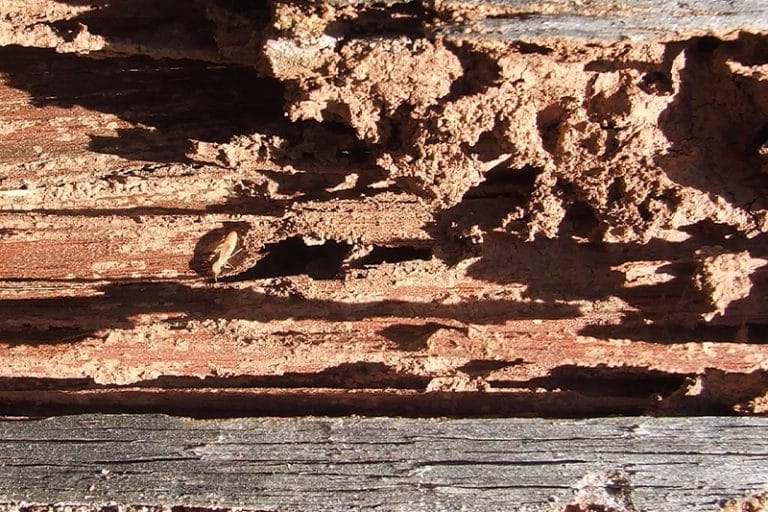
Termites don’t announce themselves. They don’t knock on your door or leave a calling card. Instead, they slip into your home undetected, chewing through wood 24 hours a day, seven days a week, quietly racking up damage that can cost thousands of dollars to repair.
Here in Billings, Montana, we see our share of termite activity, and the truth is, most homeowners don’t realize they have a problem until significant damage has already occurred. Nationally, termite damage costs property owners up to $5 billion every year. That’s billion with a “B.” And because most homeowner’s insurance policies don’t cover termite damage, catching an infestation early isn’t just smart, it’s essential to protecting your investment.
At Best Pest Control, we’ve helped countless Billings homeowners identify and eliminate termite colonies before they cause catastrophic structural damage. In this guide, we’ll walk you through the warning signs you should be watching for, what to do if you spot them, and how to keep these destructive pests from making your home their next meal.
Why Termites Pose a Threat to Billings Homes
You might think Montana’s cold winters would keep termites at bay. And while it’s true that our climate isn’t as hospitable to these pests as, say, the humid Southeast, Billings homeowners absolutely need to stay vigilant.
Subterranean termites, the most common type in our region, build their colonies underground where soil temperatures remain relatively stable year-round. They venture up into homes through foundation cracks, expansion joints, and anywhere wood contacts soil. Once inside your walls, they’re protected from the elements and can feed continuously.
What makes termites so dangerous? A mature colony can consume roughly one pound of wood per day. That might not sound like much, but over months or years, that adds up to compromised floor joists, weakened wall studs, and damaged support beams. We’ve seen homes in the Billings area where termite damage was so extensive that entire sections of flooring had to be replaced.
The financial impact can be staggering. Beyond the repair costs, termite damage can significantly reduce your property value and make it harder to sell your home. Some homeowners have discovered infestations only after a pre-sale inspection, talk about bad timing.
The good news? Termites leave clues. If you know what to look for, you can catch an infestation before it spirals out of control.
Visible Damage to Wood Structures
Termites eat wood from the inside out, which is why infestations often go unnoticed until the damage becomes severe. But, there are telltale signs that something’s wrong if you know where, and how, to look.
Hollow-Sounding Wood
One of the most reliable ways to check for termite damage is simply to knock on wooden surfaces throughout your home. Healthy wood produces a solid, dense sound. Termite-damaged wood? It sounds hollow or papery.
Try tapping on baseboards, door frames, window sills, and any exposed wooden beams in your basement or crawl space. If you notice areas that sound noticeably different from the surrounding wood, that’s a red flag worth investigating further.
We recommend using the handle of a screwdriver for this test. Gently press the tip into the wood surface, if it sinks in easily or the wood crumbles, termites may have already done significant damage beneath the surface.
Buckling Floors and Sagging Ceilings
As termites consume the wooden structures supporting your floors and ceilings, you may start noticing physical changes in these surfaces. Floors might feel spongy underfoot or appear to buckle or warp. Ceilings can develop subtle sags or dips.
These symptoms often get mistaken for water damage, and honestly, the two can look remarkably similar. But if you’re seeing buckling floors or soft spots in drywall and trim without any evidence of a leak, termites should be on your radar.
Pay particular attention to areas near the foundation, bathrooms, and anywhere that moisture tends to accumulate. Termites are drawn to damp environments, so these spots are often ground zero for infestations.
Mud Tubes and Shelter Tunnels
If there’s one termite warning sign that screams “call a professional immediately,” it’s mud tubes. These pencil-width tunnels are essentially highways that subterranean termites build to travel between their underground colony and your home’s wood supply.
Mud tubes are made from soil, wood particles, and termite saliva. They typically appear along foundation walls, in crawl spaces, on support piers, and snaking up basement walls. We’ve also found them on exterior walls, along plumbing pipes, and even inside interior walls when we’ve opened them up for inspection.
Why do termites build these tubes? Simple: survival. Subterranean termites can’t survive in open air for long, they need moisture and protection from predators. These shelter tunnels provide both, allowing worker termites to safely travel back and forth while staying hidden from view.
Here’s what to do if you find mud tubes: break off a small section and check back in a few days. If the tube has been repaired, you’ve got an active infestation on your hands. Even if it hasn’t been rebuilt, that doesn’t mean the termites are gone, they may have simply found a different route into your home.
Don’t make the mistake of thinking you can solve the problem by destroying the visible mud tubes. The colony itself is underground, and unless you eliminate it at the source, those tubes will reappear.
Discarded Wings and Swarmers
Every spring (and sometimes fall), mature termite colonies release swarmers, winged reproductive termites whose job is to fly off and establish new colonies. If you’ve ever seen a cloud of small, winged insects emerging from the ground or a tree stump, you’ve witnessed a termite swarm.
What does this mean for your home? Swarmers themselves don’t cause damage, they don’t eat wood or tunnel through structures. But their presence near your property indicates that a mature colony exists somewhere close by. And if you’re finding swarmers inside your house? That’s a strong sign the colony is either in your home or immediately adjacent to it.
After mating, swarmers shed their wings. You’ll often find these discarded wings in piles near windowsills, along baseboards, or in spider webs. The wings are small, translucent, and all roughly the same size, about a quarter to half an inch long.
A quick note on identification: termite swarmers are often confused with flying ants, but there are key differences. Termite swarmers have straight antennae, a broad waist, and wings of equal length. Flying ants have bent antennae, a pinched waist, and front wings that are longer than their back wings. If you’re not sure what you’re looking at, snap a photo and give us a call, we’re happy to help identify the pest.
Finding even a handful of discarded wings in your home warrants a professional inspection. It’s far better to check and find nothing than to assume you’re in the clear.
Frass and Other Physical Evidence
While subterranean termites (the most common type in Billings) don’t leave frass behind, drywood termites do. Frass is essentially termite droppings, tiny, wood-colored pellets that these pests push out of their tunnels as they eat through your home’s wooden structures.
Frass often accumulates in small piles that look like sawdust or fine sand. You might find it beneath wooden furniture, along baseboards, or near door frames. The pellets themselves are tiny, usually about one millimeter long, and have a distinctive six-sided shape when examined closely.
Beyond frass, there are other physical clues that suggest termite activity:
- Blistering paint or wallpaper: As termites tunnel just beneath surfaces, they can cause paint to bubble or wallpaper to peel. This is often mistaken for water damage.
- Tight-fitting doors and windows: Termite damage can cause wooden frames to warp, making doors and windows suddenly difficult to open or close.
- Visible maze patterns: If you peel back damaged wood or drywall, you may see the intricate tunneling patterns that termites create as they feed.
- Clicking sounds: In quiet moments, you might actually hear termites. Worker termites are noisy eaters, and soldier termites bang their heads against tunnel walls to warn the colony of threats.
Any of these signs, alone or in combination, should prompt a closer look. We can’t stress this enough: the earlier you catch a termite infestation, the less damage you’ll face and the less expensive the treatment will be.
What to Do If You Spot Termite Signs
So you’ve found mud tubes along your foundation, discovered a pile of discarded wings on your windowsill, or noticed that your hardwood floors have developed suspicious soft spots. What now?
First, don’t panic, but don’t delay either. Termite damage accumulates over time, so every week you wait is another week of potential structural harm.
Here’s our recommended approach:
1. Document what you’ve found. Take photos and note the location of any evidence. This information helps pest control professionals assess the scope of the problem during an inspection.
2. Avoid disturbing the termites. It might be tempting to spray insecticide, remove mud tubes, or tear out damaged wood. Resist that urge. Disturbing a colony can cause termites to scatter and relocate, making them harder to eliminate completely.
3. Schedule a professional inspection. A trained technician will conduct a thorough examination of your property, inside and out, to determine the extent of the infestation and identify all entry points. At Best Pest Control, our inspections cover everything from your foundation and crawl spaces to attics and exterior wood piles.
4. Get a treatment plan. Based on the inspection findings, you’ll receive recommendations for treatment. Options may include liquid termiticides applied around your foundation, bait systems that eliminate the colony over time, or a combination approach depending on the severity of the infestation.
5. Address any damage. Once the termites are eliminated, you’ll need to assess and repair structural damage. In some cases, this means replacing wooden components: in others, reinforcement may be sufficient.
Remember, DIY termite treatment rarely works. Over-the-counter products simply don’t penetrate deep enough to reach the colony, and without professional-grade equipment and knowledge, you’re unlikely to eliminate the problem completely.
Preventing Future Termite Infestations
Once you’ve dealt with an infestation, or even if you’ve never had one, prevention becomes the name of the game. Here are practical steps every Billings homeowner can take to make their property less attractive to termites.
Eliminate wood-to-soil contact. Termites need a bridge between the ground and your home’s wooden structures. Make sure siding, door frames, and deck posts don’t directly touch the soil. Use concrete bases or metal barriers where possible.
Manage moisture around your foundation. Fix leaky faucets, repair cracked pipes, and ensure your gutters direct water away from your home’s foundation. Termites thrive in moist environments, so reducing humidity makes your property less inviting.
Store firewood away from your home. We recommend keeping woodpiles at least 20 feet from your house and elevated off the ground. The same goes for lumber, mulch, and other cellulose materials.
Seal entry points. Caulk cracks in your foundation, fill gaps around utility lines, and repair any damaged weatherstripping. The harder you make it for termites to get in, the better protected you’ll be.
Schedule regular inspections. Even if you’re not seeing signs of termites, an annual inspection can catch problems before they become catastrophic. Think of it like a dental checkup, preventive care is always cheaper than emergency treatment.
Consider ongoing protection. For homes in termite-prone areas or properties that have experienced past infestations, an ongoing treatment plan can provide peace of mind. Best Pest Control offers monitoring and prevention programs designed to catch termite activity early and keep your home protected year-round.
Prevention isn’t glamorous, but it’s effective. A little effort now can save you thousands of dollars, and a lot of headaches, down the road.
Conclusion
Termites are sneaky, persistent, and expensive. But they’re not invincible. By knowing what to look for, mud tubes snaking up your foundation, hollow-sounding wood, discarded wings near windows, soft spots in floors and trim, you can catch an infestation before it causes serious structural damage to your Billings home.
The key is staying vigilant. Make it a habit to inspect vulnerable areas of your home periodically, and don’t ignore warning signs just because they seem minor. What looks like a small problem today can quickly become a major repair bill tomorrow.
If you’ve spotted any of the termite warning signs we’ve discussed, or if it’s simply been a while since your last inspection, we’re here to help. At Best Pest Control, we serve homeowners throughout Billings and all of Montana, providing thorough inspections and effective treatment plans tailored to your property’s specific needs.
Whether it’s termites, spiders, rodents, or any other pest that creeps or crawls, don’t wait until the problem gets worse. Contact Best Pest Control today, and let’s protect your home together.