
Summer in Billings brings backyard barbecues, lazy afternoons on the patio, and unfortunately, some uninvited guests. Ants marching across your deck and wasps buzzing around your outdoor gatherings can turn a relaxing day into a frustrating battle. We’ve helped countless Montana homeowners reclaim their yards from these persistent pests, and we know what works in our unique climate. Whether you’re dealing with a few scouts or a full-blown infestation, understanding how to prevent and control ants and wasps is essential for enjoying your summer. Let’s jump into practical strategies that actually deliver results.
Why Ants and Wasps Thrive in Billings During Summer
Billings summers create near-perfect conditions for ants and wasps to flourish. Our warm temperatures, typically ranging from the 70s to 90s, accelerate their metabolic rates and reproductive cycles. Both insects become significantly more active when temperatures climb above 60°F, and our long summer days give them plenty of time to forage, build nests, and expand their colonies.
Ants are particularly opportunistic during this season. They’re constantly searching for food and water sources, and Montana’s dry summer conditions drive them toward irrigated lawns and homes where moisture is available. A single ant colony can house 300,000 to 500,000 individuals, meaning that small trail of ants on your sidewalk represents a much bigger problem underground.
Wasps, meanwhile, hit their population peak in late summer. Queens that survived winter establish new colonies in spring, and by July and August, those nests can contain hundreds or even thousands of workers. They’re drawn to our outdoor activities, especially anything involving sugary drinks or grilled meats. The combination of available food sources and warm, stable weather makes Billings yards prime real estate for both pests.
Identifying Common Ant Species in Your Yard
Not all ants are created equal, and knowing what you’re dealing with is half the battle. In Billings, we encounter several species regularly, each with different behaviors and control requirements.
Pavement ants are probably the most common. These small, dark brown ants build their colonies under sidewalks, driveways, and patios. You’ll notice small mounds of displaced soil near cracks in concrete. They’re not particularly destructive, but they’ll invade kitchens and pantries in search of greasy or sweet foods.
Carpenter ants are a bigger concern. These larger black ants don’t eat wood like termites, but they excavate it to build their nests. If you see large black ants wandering near woodpiles, decks, or the exterior of your home, pay attention. Sawdust-like debris near wooden structures is a telltale sign.
Field ants prefer to stay outdoors, building large mounds in lawns and gardens. While they rarely come inside, their mounds can damage lawn equipment and create unsightly patches in your yard.
Identification matters because it determines treatment strategy. What works on pavement ants won’t necessarily eliminate carpenter ants, and vice versa. At Best Pest Control, we always start with a thorough inspection to identify the specific species before recommending any treatment plan.
Recognizing Wasp Nests Before They Become a Problem
The best time to deal with a wasp nest is when it’s still small, ideally in late spring or early summer when the queen is just getting established. By August, that golf-ball-sized nest can grow into something the size of a basketball with hundreds of aggressive defenders.
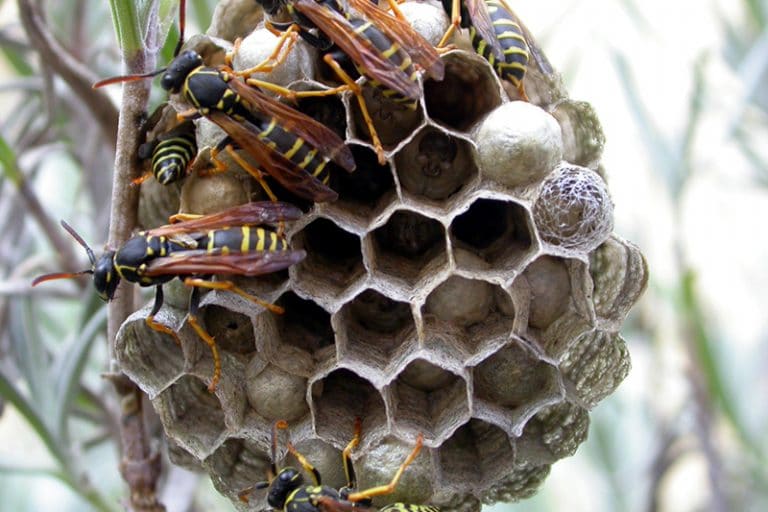
Paper wasps build open, umbrella-shaped nests usually found under eaves, porch ceilings, and deck railings. These nests look like gray papery honeycombs and are relatively easy to spot. Paper wasps are generally less aggressive unless you disturb their nest directly.
Yellowjackets are trickier. They often build underground in abandoned rodent burrows, or in wall voids and attic spaces. You might not even know you have a yellowjacket nest until you mow over it or notice increased wasp activity around a particular spot. These are the wasps that crash your picnic and can sting multiple times.
Bald-faced hornets construct those impressive gray football-shaped nests you see hanging from trees and building overhangs. They’re highly protective of their nests and will attack in numbers if they feel threatened.
We recommend doing a thorough walk-around of your property in early summer. Check under eaves, inside sheds, around playground equipment, and near air conditioning units. If you spot a nest, mark the location and avoid disturbing it, especially if you or family members have allergies. A wasp sting can be dangerous for allergic individuals, so don’t take chances.
Natural Prevention Methods That Actually Work
Prevention is always easier than elimination, and there’s a lot you can do to make your yard less appealing to ants and wasps without reaching for harsh chemicals right away.
For ant prevention:
- Keep your yard free of debris like mulch piles, leaf litter, and stacked wood near the house. These create perfect nesting environments.
- Trim trees and shrubs so branches don’t touch your home’s exterior. Ants use these as highways.
- Fix leaky outdoor faucets and ensure proper drainage. Moisture attracts ants, especially during dry spells.
- Store firewood at least 20 feet from your home and elevate it off the ground.
For wasp prevention:
- Remove fallen fruit from fruit trees promptly.
- Keep garbage cans tightly sealed and rinse recycling containers.
- Cover food and drinks when eating outdoors.
- Seal gaps around windows, doors, and utility penetrations where wasps might build nests.
Some homeowners have success with peppermint oil sprays around entry points, wasps seem to dislike the scent. Planting mint, citronella, or eucalyptus around patios can provide a mild deterrent as well. But let’s be honest: natural methods work best as prevention. Once you have an established colony, you’ll likely need more targeted approaches.
Targeted Treatment Options for Stubborn Infestations
When prevention isn’t enough and you’re facing an established pest problem, it’s time for more direct action.
For ants, the key is understanding that what you see is just the tip of the iceberg. Those ants trailing across your patio represent a fraction of the colony. DIY sprays might kill visible ants, but they usually leave the nest intact, and it will simply produce more workers. Bait stations work better because foraging ants carry the poison back to the colony, eventually reaching the queen.
Granular baits spread around the perimeter of your home can intercept ants before they get inside. Liquid baits placed near trails are effective for species that prefer sweet foods. The trick is patience, baits take time to work through a large colony.
For wasps, timing matters. Treat nests at dusk or dawn when wasps are less active and most workers are inside. Aerosol sprays designed for wasps can be effective for exposed paper wasp nests, but yellowjacket ground nests require different approaches, often dust insecticides applied directly into the entrance.
A word of caution: treating wasp nests can be genuinely dangerous. Wasps release alarm pheromones when threatened, which can trigger a mass attack. We’ve seen plenty of DIY attempts go wrong, resulting in multiple stings. If a nest is large, in a difficult location, or you’re allergic, professional treatment is the safer choice.
When to Call a Professional Pest Control Service
There’s no shame in calling for backup. Some situations simply require professional expertise and equipment.
You should consider calling us at Best Pest Control when:
- Colonies are large or dispersed. Ant colonies with 300,000+ members and multiple satellite nests are nearly impossible to eliminate with store-bought products.
- Carpenter ants are involved. These ants can cause structural damage, and we need to locate and treat the parent colony, which is often hidden in wall voids or other inaccessible areas.
- Wasp nests are in dangerous locations. Inside walls, underground, high on rooflines, or near children’s play areas, these situations call for professional equipment and protective gear.
- Someone in your household is allergic. When wasp stings pose a genuine health risk, don’t gamble with DIY methods.
- DIY efforts have failed. If you’ve tried baits and sprays without results, the problem is likely more complex than surface-level treatment can address.
At Best Pest Control, we start with a thorough inspection of your home and property, inside and out. We identify the specific species, locate nests, determine what’s attracting them, and create a customized treatment plan. For ongoing protection, we can set up regular treatments that help repel pests before they become problems. We’re a family-owned Montana company with decades of experience dealing with the specific pests that thrive in our climate. Whether you prefer traditional treatments or our chemical-free, eco-friendly options, we’ve got solutions that work.
Conclusion
Summer in Billings should be about enjoying your yard, not battling pests for it. With early identification, smart prevention strategies, and targeted treatments when necessary, you can keep ants and wasps under control. Remember that ant colonies are massive and require patience to eliminate, while wasp nests are best addressed early in the season before populations explode. If you’re facing a stubborn infestation or simply want peace of mind, contact Best Pest Control. We’re here to protect your home, family, and summer fun.